
A Diamond in the Rough North
The name has nothing to do with luxury. It refers to the diamond-shaped loop the route traces across the top of Iceland — a region so geologically alive, so theatrically beautiful, that it almost defies belief. This is the North: raw, remote, and magnificent in every season.
At Ice Paradise Tours, the Diamond Circle holds a special place in our hearts. We’ve driven this route in every season, in every kind of weather, and it never stops surprising us. That’s exactly why we built tours around it.
Looping roughly 250 kilometres from the otherworldly shores of Lake Mývatn out to the Tjörnes Peninsula and back through the ancient canyons of Jökulsárgljúfur, the Diamond Circle is one of Iceland’s great travel experiences. Fully paved since 2020, it rewards those who take their time with sights that range from Europe’s most thunderous waterfall to the silent fossil beds of a vanished sea.
You can complete the circuit in a single long day — but we’d encourage you not to. The Diamond Circle is not a checklist. It’s a landscape to be absorbed. Our recommended tours span two to three days, giving each stop the unhurried attention it truly deserves.
“Drive it in a day if you must. Live it over three, and you’ll carry it forever.”
The Six Stops Worth Slowing Down For
01 Goðafoss — The Waterfall of the Gods
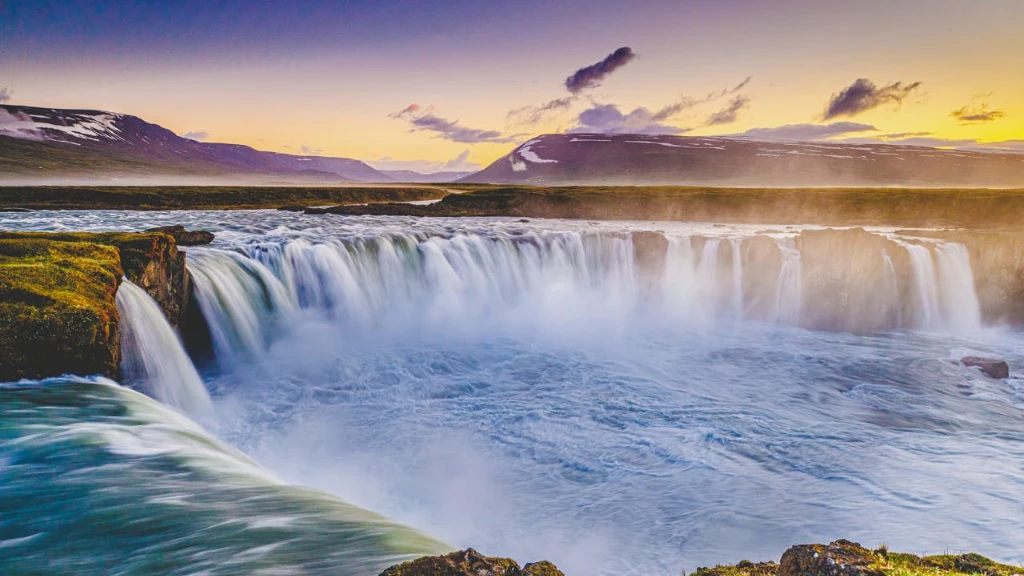
Few waterfalls carry the weight of history that Goðafoss does. In the year 1000, Iceland’s lawspeaker Þorgeirr Ljósvetningagoði — faced with the challenge of unifying a fractured nation — chose Christianity as the country’s new faith and marked the decision by casting his carved Norse idols into these thundering falls. The mythology is inseparable from the mist.
Stand at the curved rim of this horseshoe cascade and you feel it: the sense that something ancient and irreversible happened here. It’s one of the first stops on our Diamond Circle tours, and guests consistently tell us it sets the tone for everything that follows.
02 Lake Mývatn — A World Built on Fire
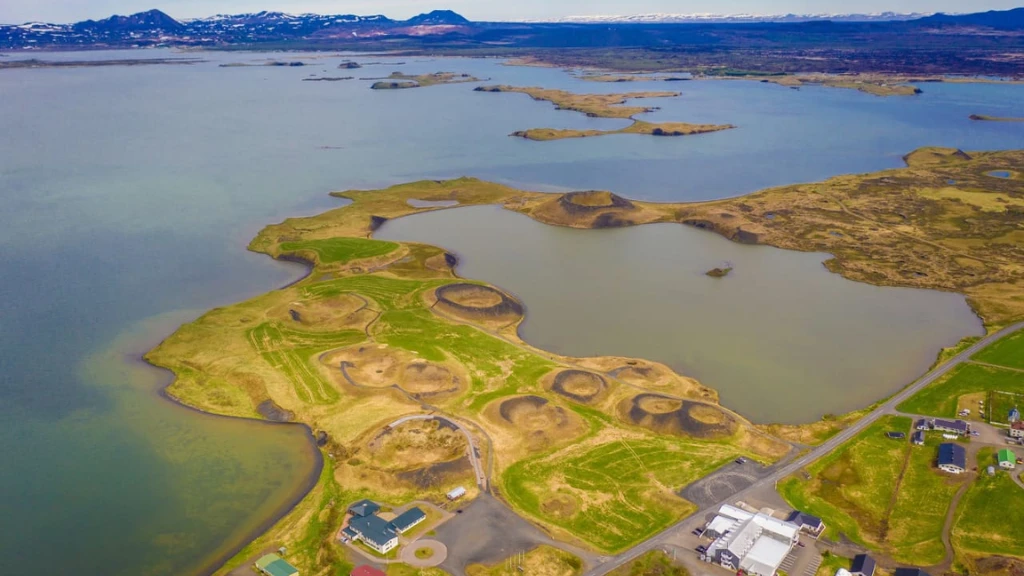
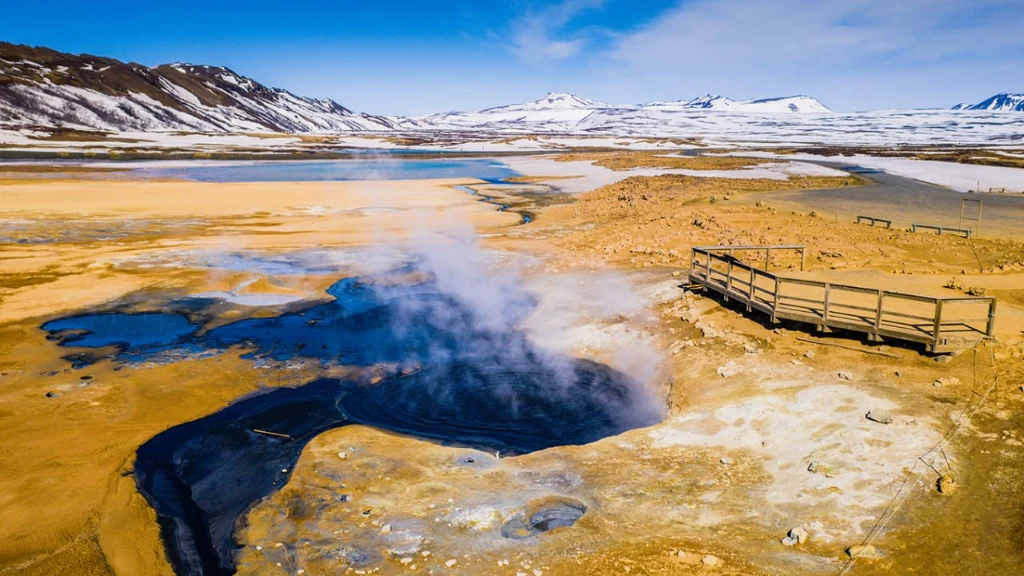
Mývatn is not a place; it’s a mood. This shallow, crater-pocked lake sits atop one of Iceland’s most geologically restless zones, and the evidence is everywhere — boiling mud pools bubble at Hverir, lava castles rise from the shore at Dimmuborgir, and pseudo-craters dot the southern banks like a moonscape.
In summer, the lake teems with more species of ducks than almost anywhere else on earth. In winter, frost-white and eerily still, it becomes a place of profound, austere beauty. Our guides know every corner of Mývatn — and they know exactly where to take you for the views most visitors never find.
03 Jökulsárgljúfur Canyon — A Full Day’s Adventure
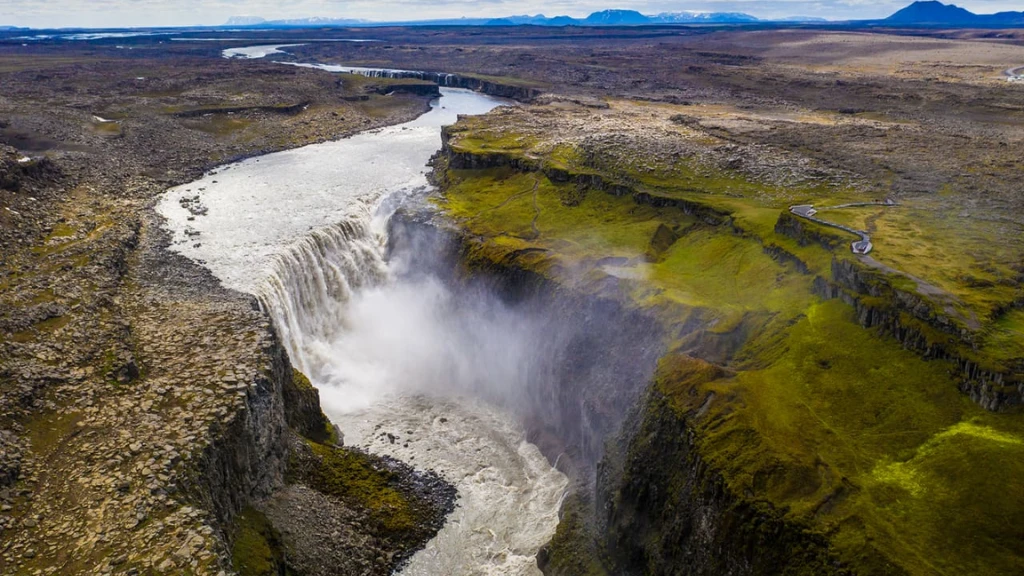
If you give only one stop an entire day on your Diamond Circle journey, let it be this canyon system within Vatnajökull National Park. Begin at the southern end with Dettifoss — Europe’s most powerful waterfall, pushing 193 cubic meters of glacial meltwater over a 44-metre drop every second. The roar reaches you long before the view does.
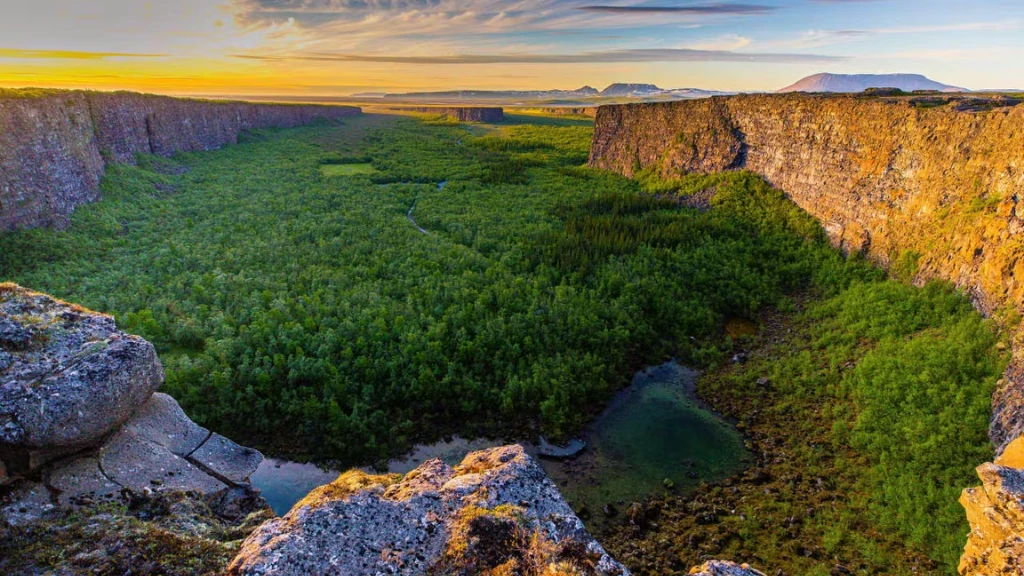
Drive north through Vesturdalur, where the bizarre basalt columns of Hljóðaklettar rise in swirling formations that geologists are still working to fully explain. End at Ásbyrgi: a horseshoe-shaped canyon draped in birch and willow, so startlingly green you’ll wonder if you’ve somehow left Iceland. Norse legend holds it was formed by the hoofprint of Odin’s eight-legged horse, Sleipnir. Geology suggests a catastrophic glacial flood. Out here, both feel equally possible.
04 Húsavík — Europe’s Whale Watching Capital
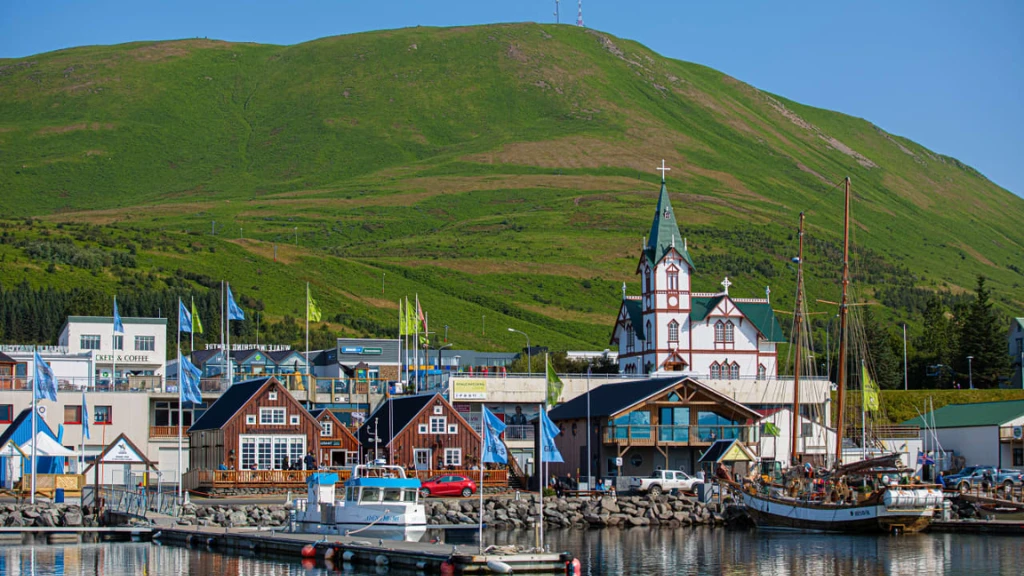
Húsavík earns its title honestly. The town’s colorful harbors, framed by snow-capped peaks and the wide expanse of Skjálfandi Bay, is the Continent’s finest place to watch humpback whales — and in some years, the elusive blue whale, the largest creature ever to have lived on earth.
Whale watching tours run from May through October, and sightings are remarkably consistent. We partner with trusted local operators in Húsavík so our guests get the best possible experience on the water. Beyond the bay, the 1907 timber church is one of Iceland’s most photographed landmarks, and the Exploration Museum — dedicated to the Apollo astronauts who trained in this very region — is a genuine surprise.
05 Tjörnes Peninsula — The Quiet Revelation
Tjörnes is the Diamond Circle’s hidden gem — the stop most visitors rush past, and the one those who linger remember longest. The peninsula juts into the sea at the junction of two tectonic plates, and its layered cliff faces hold millions of years of marine fossil records exposed in open air.
Bring binoculars for the puffins and seabirds that crowd the sea stacks, and linger at the viewpoints where the ocean stretches unbroken toward the Arctic. When we designed our multi-day Diamond Circle itineraries, we made sure Tjörnes was never skipped. It’s too special to rush.
06 · Ásbyrgi — Where Legends Rest
Ásbyrgi deserves its own moment. In autumn, the canyon’s birch trees flush amber and gold while the vertical basalt walls create a natural amphitheatre of color. A short trail leads to a raised viewpoint over the entire horseshoe depression — one of those views that silences a group mid-conversation.
In spring, the meltwater lake at the canyon floor mirrors the cliffs in perfect stillness, creating a world that feels freshly made and entirely yours. Our guides love bringing guests here at golden hour. The light does something extraordinary to these walls.
When to Visit
Summer (June – August) — Midnight sun illuminates long days made for hiking, whale watching, and bird photography. The canyon trails are at their most accessible and the lake at its most alive. Our most popular season for the Diamond Circle.
Autumn (September – October)— The birch forests of Ásbyrgi flush gold and copper. Crowds thin. The Northern Lights begin to appear. This is arguably the route’s most cinematic season, and one of our personal favourites at Ice Paradise Tours.
Winter (November – March) — Lake Mývatn freezes into eerie ice sculptures. Dettifoss roars beneath a crust of frost. The aurora dances overhead. A 4×4 is essential — all our winter vehicles are fully equipped for these conditions.
Spring (April – May) — Snowmelt fills the rivers and the fossils of Tjörnes glisten in early light. Roads reopen, prices are gentler, and the landscape feels newly discovered. If you want the Diamond Circle largely to yourself, come in spring.
Practical Notes
- Distance: approximately 250 km, fully paved since 2020
- Recommended time: 2–3 days; possible in one long day
- 4×4 advised: October through April — all Ice Paradise Tours vehicles are equipped accordingly
- Road conditions: we monitor safetravel.is daily and update our guests in real time
- Best base towns: Húsavík or Mývatn village for overnight stays
- Pairs well with: the Arctic Coast Way or a full Ring Road circuit — ask us about combined itineraries
Ready to Experience It?
The Diamond Circle is deceptively easy to underestimate on a map. A 250-kilometre loop; a handful of well-known names; a detour off the Ring Road. But the North of Iceland has a way of rearranging your expectations. You come for the waterfalls and leave pondering a millennium of history. You stop for a whale and spend an hour watching the light change on the bay. You pull over for fossils and find yourself counting tectonic time in the cliff face.
That’s what we’ve built Ice Paradise Tours around — not just getting you to the sights, but making sure you actually feel them.
Take the detour. Take the extra day. Let us take care of the rest.
The Diamond Circle isn’t a route. It’s a reminder of what the earth looks like when it hasn’t been tamed.
Very good i like it