
Iceland is one of the most geologically fascinating places on Earth. Known as the “Land of Fire and Ice,” this island nation sits at the meeting point of powerful tectonic forces where glaciers, lava fields, steaming vents, and volcanic mountains shape the landscape.
From ancient eruptions that changed global climate to modern lava flows visible near the capital, volcanoes are deeply connected to Iceland’s history, culture, and environment.
This complete guide explores Iceland’s volcanic activity, the most famous volcanoes, major eruptions in history, and why this small island has become one of the world’s most remarkable natural laboratories for volcanology.
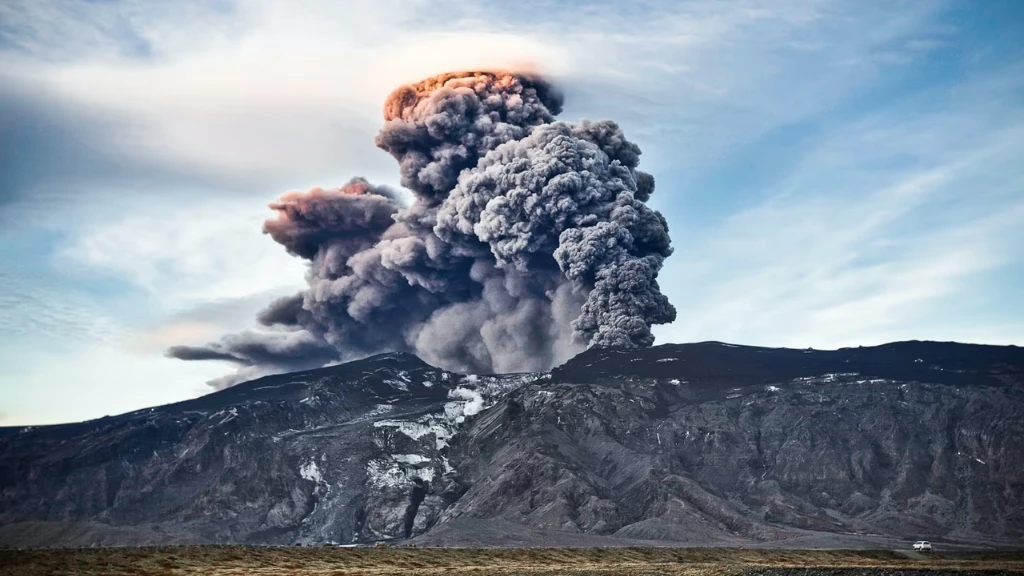
Why Iceland Is One of the Most Volcanically Active Places on Earth
The reason for Iceland’s intense volcanic activity lies beneath the surface.
The island sits directly on the Mid‑Atlantic Ridge, where the North American Plate and the Eurasian Plate are slowly pulling apart.
At the same time, Iceland lies above a volcanic hotspot, a region where extremely hot magma rises from deep within the Earth’s mantle.
This rare geological combination creates:
- Frequent volcanic eruptions
- Vast lava fields
- Geothermal hot springs
- Geysers and steaming vents
- New land formation
One of the best places to actually see this tectonic divide is Thingvellir National Park, where visitors can stand between the two continental plates.
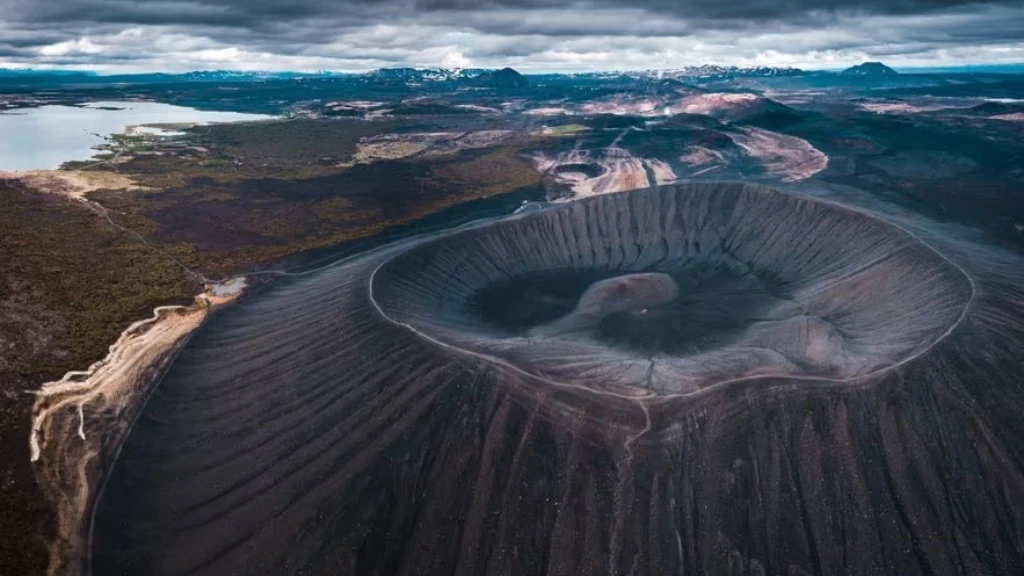
How Many Volcanoes Are in Iceland?
Iceland contains around 130 volcanoes, both active and dormant.
Among them are approximately 32 active volcanic systems, spread across different regions of the country.
These volcanoes are concentrated in several main volcanic zones:
Iceland’s Main Volcanic Regions
- Reykjanes Peninsula (southwest)
- East Volcanic Zone
- North Volcanic Zone
- Westman Islands
- Snæfellsnes Belt
- Öræfajökull Belt
The only region without active volcanoes is the Westfjords, which is the oldest part of Iceland’s landmass.
Iceland Volcano Map: Where the Most Active Areas Are
The most active volcanic region today is the Reykjanes Peninsula, located near the capital Reykjavík.
Since 2021, this area has experienced multiple eruptions, marking the start of what scientists believe could be a decades-long period of volcanic activity.
Other important volcanic areas include:
- The Vatnajökull region, hiding several powerful subglacial volcanoes
- The Lake Mývatn area with crater lakes and geothermal landscapes
- The Snæfellsnes Peninsula, often called “Iceland in miniature”
9 Famous Volcanoes in Iceland
With over a hundred volcanoes across the island, it would take years to explore them all. However, several stand out because of their beauty, historical eruptions, or unique geological features.
1. Hverfjall – The Perfect Volcano for Hiking
Located near Lake Mývatn, Hverfjall is one of Iceland’s most accessible volcanic craters.
The volcano erupted about 4,500 years ago, creating a near-perfect circular crater about 1 km wide.
Visitors can walk around the crater rim in about one hour, enjoying dramatic views of lava fields and volcanic landscapes.
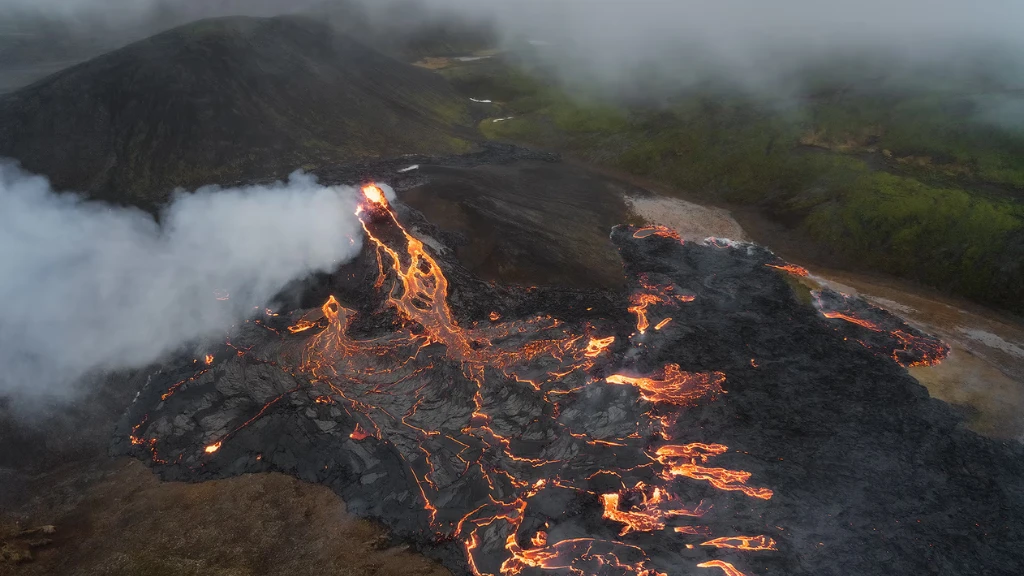
2. Krafla – The Volcano with a Blue Crater Lake
The volcanic system Krafla has erupted more than 29 times since Iceland was first settled.
Its most famous feature is the crater lake Viti, known for its striking turquoise color.
The surrounding area is filled with steaming geothermal fields, bubbling mud pools, and lava formations.
3. Askja – A Remote Volcanic Wonderland
Hidden deep in the Icelandic Highlands, Askja became famous after a massive eruption in 1875.
This eruption formed a huge caldera lake and another crater lake called Viti.
Despite its remote location, Askja is considered one of the most beautiful volcanic landscapes in Iceland.
4. Snæfellsjökull – The Legendary Glacier Volcano
Rising above the western peninsula is Snæfellsjökull, one of Iceland’s most iconic volcanoes.
It gained worldwide fame after appearing in Journey to the Center of the Earth, where the volcano served as the entrance to the Earth’s interior.
Today the volcano is part of Snæfellsjökull National Park.
5. Katla – Iceland’s Most Powerful Volcano
Beneath the massive glacier Mýrdalsjökull lies Katla, one of Iceland’s most explosive volcanoes.
When Katla erupts, the heat melts large amounts of ice, creating powerful floods known as jökulhlaups that can sweep across the landscape.
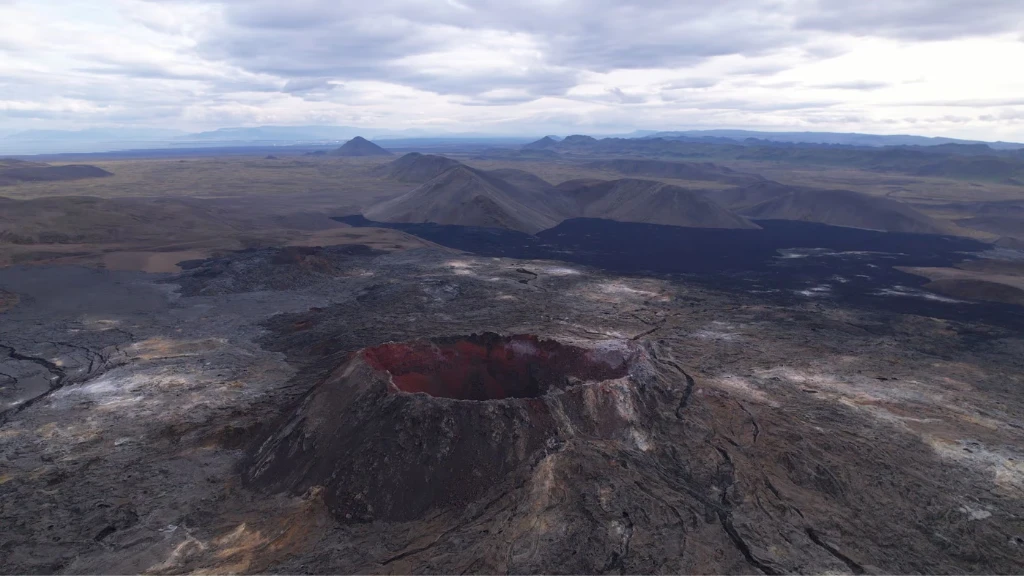
6. Hekla – The Medieval “Gateway to Hell”
During the Middle Ages, Hekla was believed to be the entrance to hell.
The volcano has erupted dozens of times since Iceland’s settlement and remains one of the country’s most unpredictable volcanic systems.
7. Grímsvötn – Iceland’s Most Active Volcano
Hidden beneath the Vatnajökull, Grímsvötn is Iceland’s most active volcano.
Because it lies beneath thick ice, eruptions often produce massive ash clouds and glacial floods.
8. Þríhnúkagígur – The Only Volcano You Can Enter
One of the most unique volcanoes in the world is Þríhnúkagígur.
It is the only volcano where visitors can descend directly into the magma chamber, which is about 120 meters deep and filled with colorful mineral formations.
9. Eyjafjallajökull – The Volcano That Stopped Europe’s Flights
The eruption of Eyjafjallajökull in 2010 became global news when ash clouds disrupted air travel across Europe.
Thousands of flights were cancelled, demonstrating how even a moderate Icelandic eruption can affect the entire world.
Famous Volcanic Eruptions in Icelandic History
The Laki Eruption (1783–1784)
One of the most devastating eruptions in history occurred at Laki.
The eruption released huge clouds of toxic gases that spread across Europe and caused severe climate disruption.
Consequences included:
- Widespread famine in Iceland
- Death of nearly one-third of the population
- Agricultural collapse
- Climate changes felt across Europe
The Heimaey Eruption (1973)
In January 1973, a fissure opened on the island of Heimaey.
Lava began flowing toward the town, destroying hundreds of buildings.
However, an incredible evacuation saved almost all residents, making it one of the most successful disaster responses in Icelandic history.
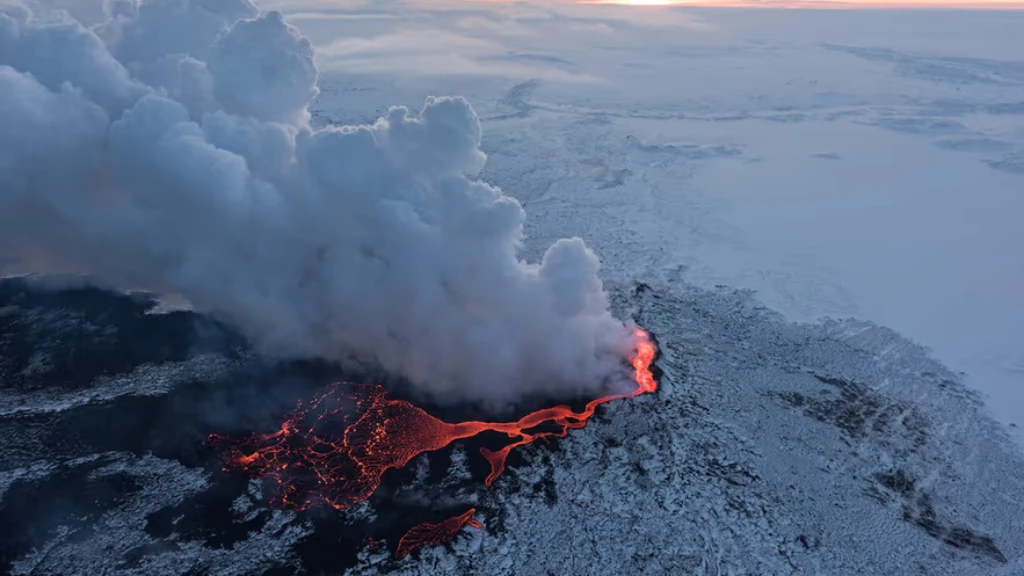
The Recent Reykjanes Eruptions (2021–2025)
After centuries of dormancy, the Fagradalsfjall erupted in 2021.
More eruptions followed nearby, including fissures at Sundhnúkagígar between 2023 and 2025.
These eruptions created spectacular lava flows but caused minimal damage to populated areas.
How Often Do Volcanoes Erupt in Iceland?
On average, Iceland experiences a volcanic eruption every few years.
However, eruptions are not evenly spaced.
Instead, activity tends to happen in clusters, followed by long quiet periods.
For example:
- The Reykjanes Peninsula had no eruptions for 800 years
- Since 2021, the region has experienced multiple eruptions in a short time
Scientists believe this active period may continue for decades.
Are Iceland’s Volcanoes Dangerous?
Although volcanic eruptions can look dramatic, the danger to human life in Iceland is relatively low.
This is because:
- Volcanoes are carefully monitored by the Icelandic Meteorological Office
- Dangerous areas are quickly closed to visitors
- Iceland has excellent emergency response systems
However, some risks still exist:
- Toxic volcanic gases
- Ash clouds
- Glacial floods (jökulhlaups)
- Road closures and air travel disruptions
How Iceland Uses Volcanic Energy
Volcanoes are not just natural hazards — they are also a major resource.
Iceland uses geothermal heat for:
- Home heating
- Electricity generation
- Greenhouse agriculture
- Hot water supply
In fact, nearly 100% of Iceland’s electricity comes from renewable sources, mainly geothermal and hydropower.
Volcano Tourism in Iceland
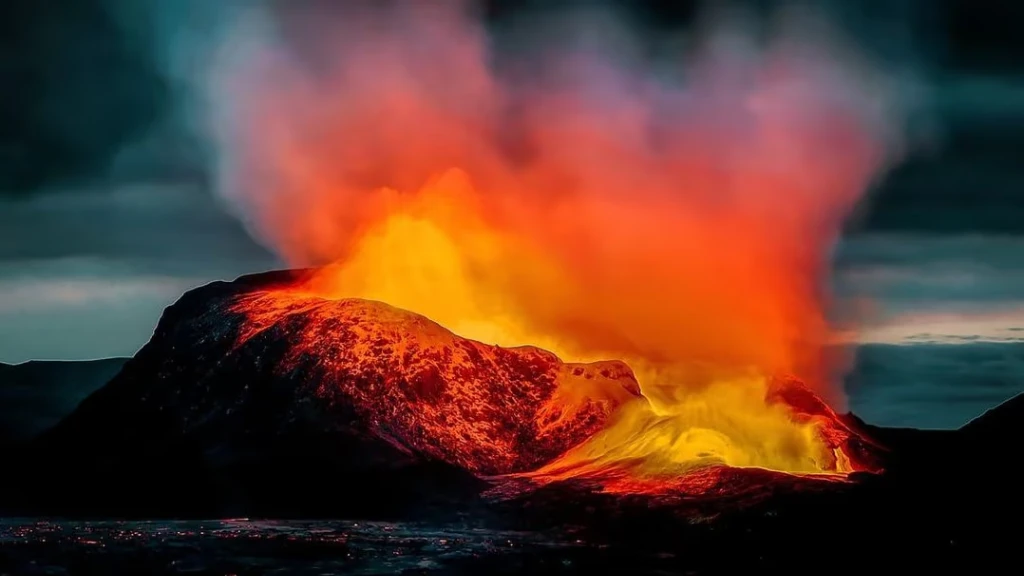
Volcanoes are one of Iceland’s biggest attractions.
Visitors travel from around the world to see:
- Lava fields
- Craters
- Geothermal landscapes
- Recent eruption sites
Some unique experiences include:
- Hiking on fresh lava fields
- Exploring lava caves
- Visiting volcanic craters
- Descending into dormant volcano chambers
The Future of Iceland’s Volcanoes
Volcanic activity will always be part of Iceland’s identity.
Scientists believe the current cycle of eruptions on the Reykjanes Peninsula may continue for several decades, gradually reshaping the landscape.
For visitors and researchers alike, Iceland remains one of the most exciting places on Earth to witness the raw power of geological forces.